

Remote sports production, cut live in North London Remote production that
holds up on the day.
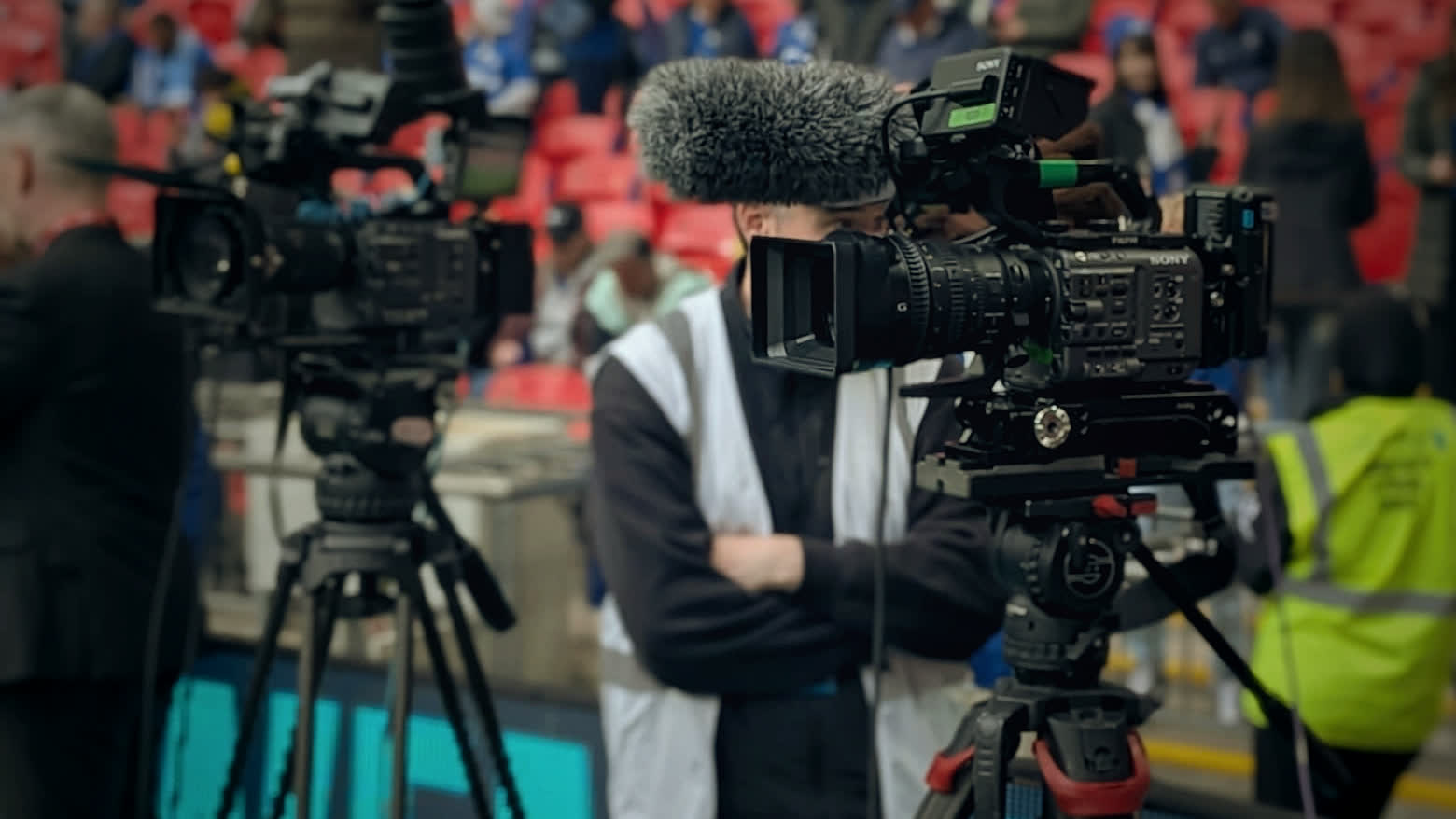
Your cameras and crew stay at the venue, and every feed comes home over our own broadcast network to our North London production control room, where we cut the programme live.
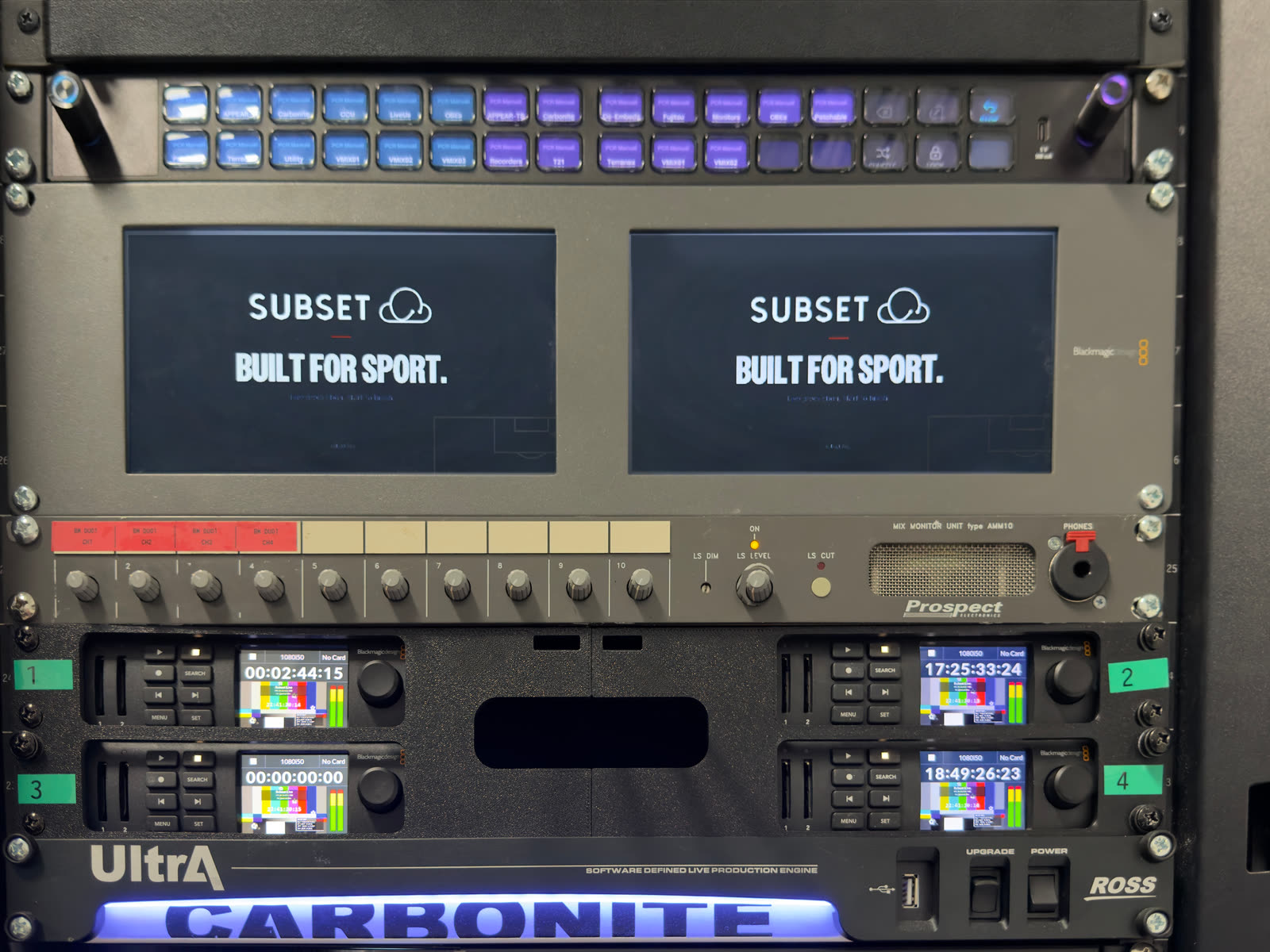
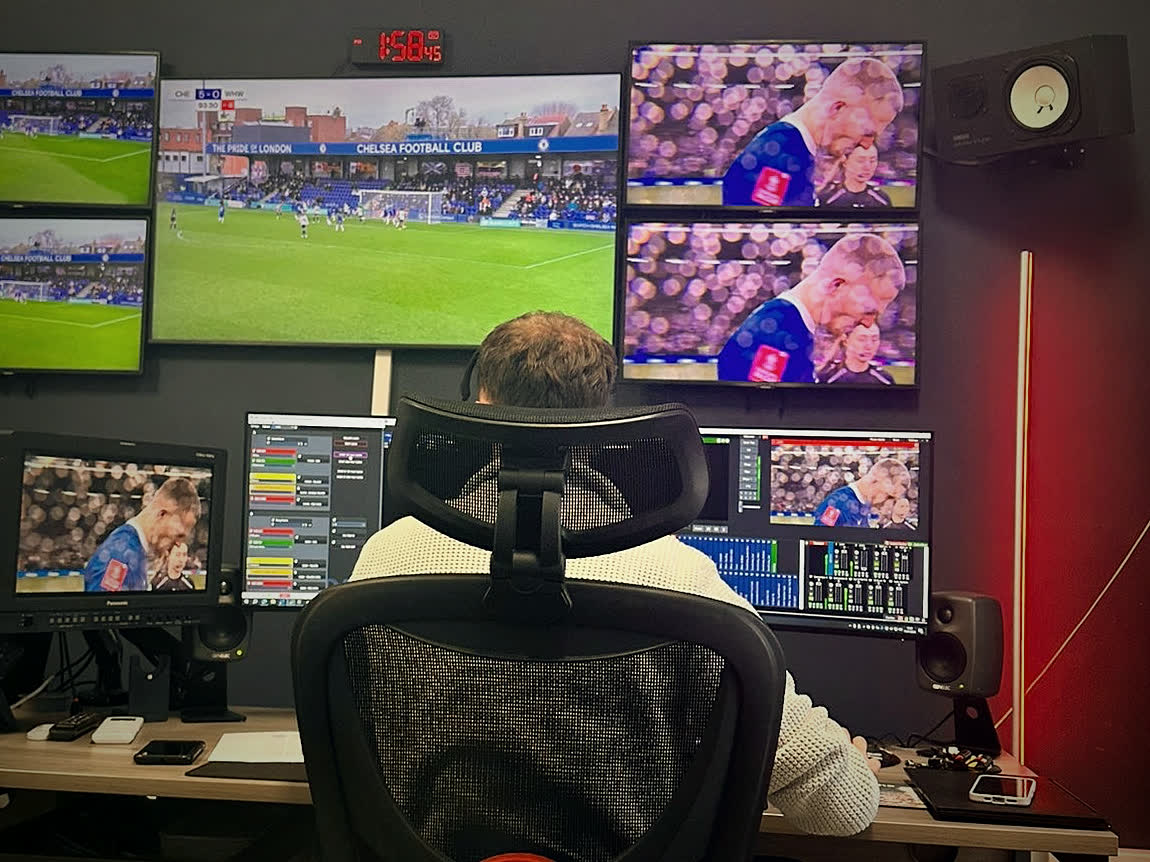
PCR01, our production control room.
Remote production, explained Cameras at the venue,
production at base.
Remote production, also called REMI (remote integration model) or at-home production, keeps the cameras at the venue and the production team at base. Only the cameras, crew and encoders travel to your venue. Vision mixing, replay, graphics and sound are run from our North London control room.
What you can commission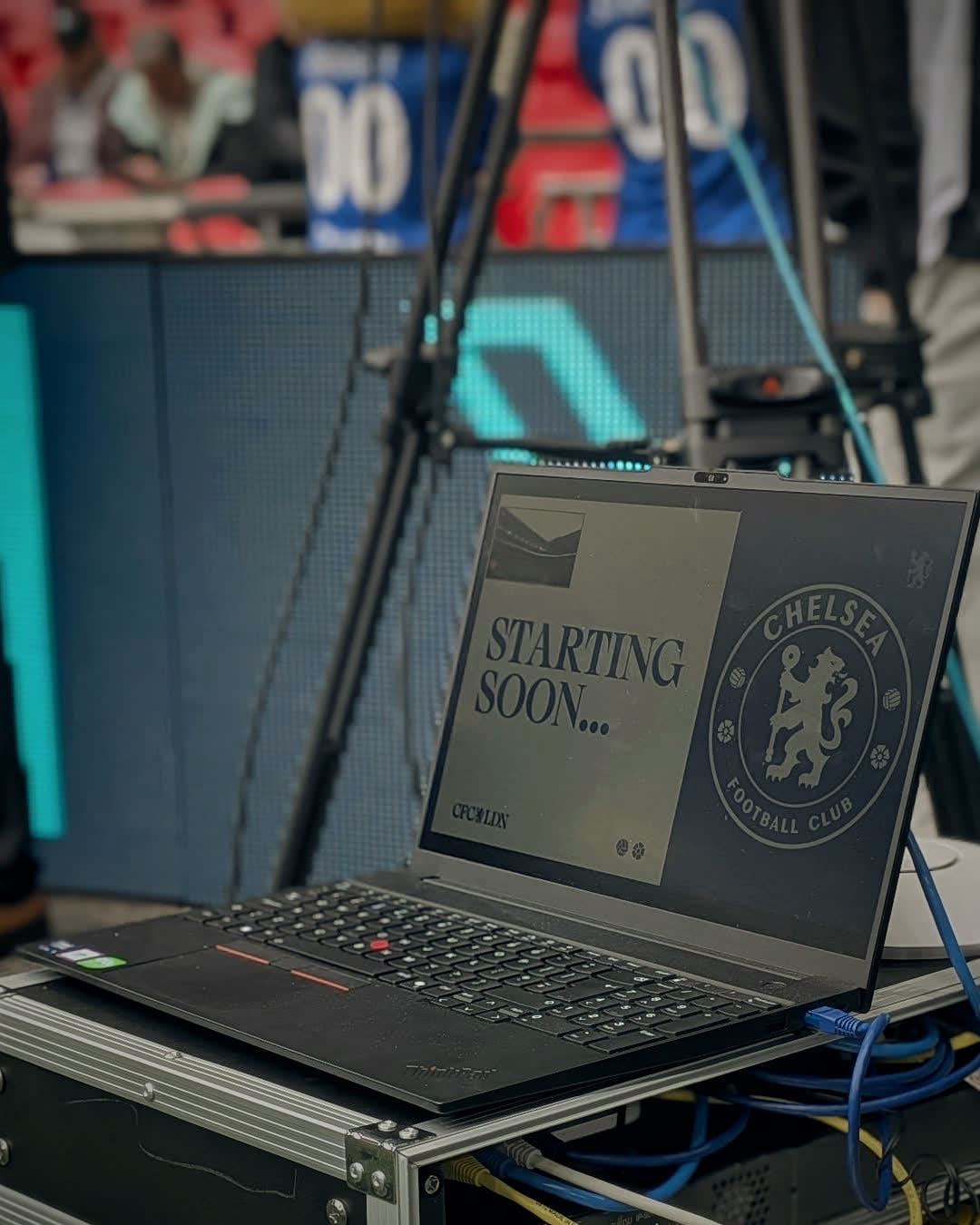
- The venue
- We assess each venue and plan the connectivity around it.
- Stadiums and training grounds
- Permanent fibre connects the venue to our own broadcast network.
- One-off events
- We bring bonded 5G and Starlink, and use the venue’s internet alongside them.
- What travels
- Every camera and its audio comes back to the control room, talkback runs both ways, and return feeds go out to the venue.
- The kit
- Main and backup encoders travel in one flight case, with a spare.
How it fits together Backed by our own
broadcast network.
Remote production depends on every camera feed reaching the control room, so we carry the feeds on our own broadcast network, watched 24/7 by our monitoring team.
How our network works-
The venue
Our cameras and crew, or the host broadcaster’s coverage.
-
Our network
Every feed is encrypted in transit, with automatic failover between paths.
-
Our control room
The programme is cut live, with graphics, replays and commentary.
-
Delivery
We deliver to broadcasters, streaming platforms and stadium screens. Your broadcasters can call our helpdesk at any hour.
PCR01 Inside our
control room.
- Vision mixing
- Your camera feeds are mixed live into one programme.
- Audio
- Audio is mixed live on our sound desk, with talkback to the crew at the venue.
- Graphics
- Graphics are built in HTML5 and Ross XPression, and one touch updates the broadcast, the big screen and the web.
- Replay
- Live replays are run from our replay position, straight into the programme.
- Edit
- Highlights, interviews and clips are edited during the event, ready for apps, web and social.
- Commentary
- Commentators can work at the venue, in our North London facility or from home.
From our work Premier League club
productions, delivered remotely.
Every camera at the ground comes back over our own broadcast network, and we cut the programme in North London.
Remote production or an OB truck?Questions we’re asked Remote production,
in numbers.
What is remote production, or REMI?
REMI, short for remote integration model, is a way of producing live sport where the cameras stay at the venue and the production team doesn’t. Every camera and its audio is sent separately over fibre or the internet to a control room, where the director, vision mixer, replay and sound team cut the programme. For us, that’s our North London control room.
How much bandwidth does each camera need?
It depends on the codec. With low-delay HEVC, a broadcast-quality HD camera typically needs 30 to 60 Mbit/s. JPEG XS adds almost no delay but needs 125 to 400 Mbit/s. Uncompressed HD would need about 1.5 Gbit/s. We choose the codec around the venue’s connectivity, with headroom for return feeds and talkback.
How much delay does it add?
A fraction of a second. Multi-camera remote productions usually run their links at around 100 to 200 milliseconds, which camera operators and the vision mixer work with comfortably once cues allow for it. Viewers don’t notice, because every camera arrives with the same delay.
How many people need to be at the venue?
Fewer than with a truck, because the director, vision mixer, replay, graphics and sound stay at base. For a typical club or tour production, the camera operators and an engineer travel. When ESPN moved to at-home production, it reported an average of 15 fewer people on site per event.
How long does set-up take?
There’s no truck to park, power up and line up, and our encoders travel in one flight case. Set-up at the venue comes down to the cameras and the connectivity, and we test the whole chain before air. A traditional match-day OB crew typically starts around six and a half hours before kick-off.
Is it cheaper than an OB truck?
Often, because there’s no truck to hire, fewer people travel and our control room is already built. It depends on the venue: a ground with permanent fibre costs less to connect than a one-off event somewhere remote. We’ll compare the whole job for your event and tell you which works out better.
What happens if the connection drops?
Every feed travels on main and backup paths with automatic failover, and our monitoring team watches every path 24/7. At one-off events we combine bonded 5G, Starlink and the venue’s internet, so no single link carries the programme.
What does the venue need to provide?
Power, somewhere for the encoders and cameras, and a way onto fibre or the internet. Stadiums and training grounds can connect to our network over permanent fibre. For one-off events we bring bonded 5G and Starlink. Tell us where the event is and we’ll assess it.
Typical figures from intoPIX, FEED, Appear, SVG and Sennheiser. Your production is planned around your venue.